Peer Reviewer Process
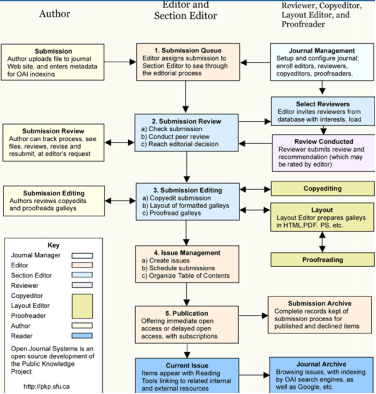
The publication of articles in KafaEdu: Journal of Education and Pedagogy is determined through a double-blind peer-review process, taking into consideration two main aspects: the relevance and scholarly contribution of the manuscript.
Every manuscript received by the editorial team undergoes an initial review by the Editorial Board. Manuscripts that meet the initial requirements are subsequently sent to at least two qualified reviewers with relevant expertise. The double-blind peer-review system is implemented to ensure that the evaluation and selection of manuscripts are conducted objectively.
Editors and reviewers provide constructive feedback to authors as part of the process of improving the quality of submitted manuscripts. The peer-review process at KafaEdu consists of the following stages:
1. Manuscript Submission
Before submitting a manuscript, authors must complete the registration process in the journal's online system and ensure that all required information and submission documents have been provided.
2. Initial Review by the Editor-in-Chief
The Editor-in-Chief conducts an initial assessment of each submitted manuscript based on the following key criteria:
a. Suitability of the manuscript to the journal's focus and scope.
b. Significance and novelty of the research.
c. Compliance with the KafaEdu Author Guidelines.
d. Plagiarism screening using Turnitin.
e. Overall quality and completeness of the manuscript.
Based on the initial assessment, the Editor-in-Chief may make one of the following decisions:
- Rejected after Initial Review: the manuscript is rejected at the initial stage and returned to the author with editorial comments or reasons for the decision.
- Revision Required: the manuscript is returned to the author for revision before proceeding to the next stage.
- Accepted for Further Peer Review: the manuscript meets the initial requirements and is forwarded to the Section Editor for reviewer assignment.
3. Reviewer Assignment
The Section Editor assigns at least two reviewers with appropriate expertise relevant to the subject of the manuscript. The manuscript is evaluated using a double-blind peer-review process, in which the identities of both authors and reviewers remain confidential.
4. Reviewer Recommendations
Reviewers evaluate the manuscript based on its academic quality, originality, methodology, relevance, scholarly contribution, and clarity of presentation. Reviewers may provide one of the following recommendations:
a. Accepted
b. Minor Revision
c. Major Revision
d. Rejected
Reviewers are also expected to provide constructive comments and recommendations to help authors improve the quality of their manuscripts.
5. Editorial Decision
The Section Editor and Editor-in-Chief consider the reviewers' evaluations and recommendations before making the final editorial decision:
- Rejected: the manuscript will not proceed to publication.
- Accepted: the manuscript is accepted for publication without further revision.
- Minor Revision: the author is required to make limited revisions based on the reviewers' comments.
- Major Revision: the author is required to make substantial revisions based on the reviewers' comments, and the revised manuscript may undergo another round of peer review.
6. Copyediting
Accepted manuscripts proceed to the copyediting stage to improve language, grammar, consistency, formatting, and overall presentation before entering the production stage.
7. Revision Assessment
For manuscripts receiving a Minor Revision or Major Revision decision, authors must revise the manuscript according to the reviewers' comments. The Section Editor evaluates the revised manuscript and determines whether it can proceed to the next stage or requires additional revisions and/or further peer review.
8. Rejection of Manuscripts
If a manuscript is rejected by the Section Editor and Editor-in-Chief, the author will receive an official notification of the editorial decision together with the relevant comments or reasons for the rejection.
9. Layout and Letter of Agreement
After the layout process has been completed, the final version of the manuscript will be sent to the author for final checking. A Letter of Agreement (LoA) will also be provided to the author in accordance with the journal's policy before the article is published.